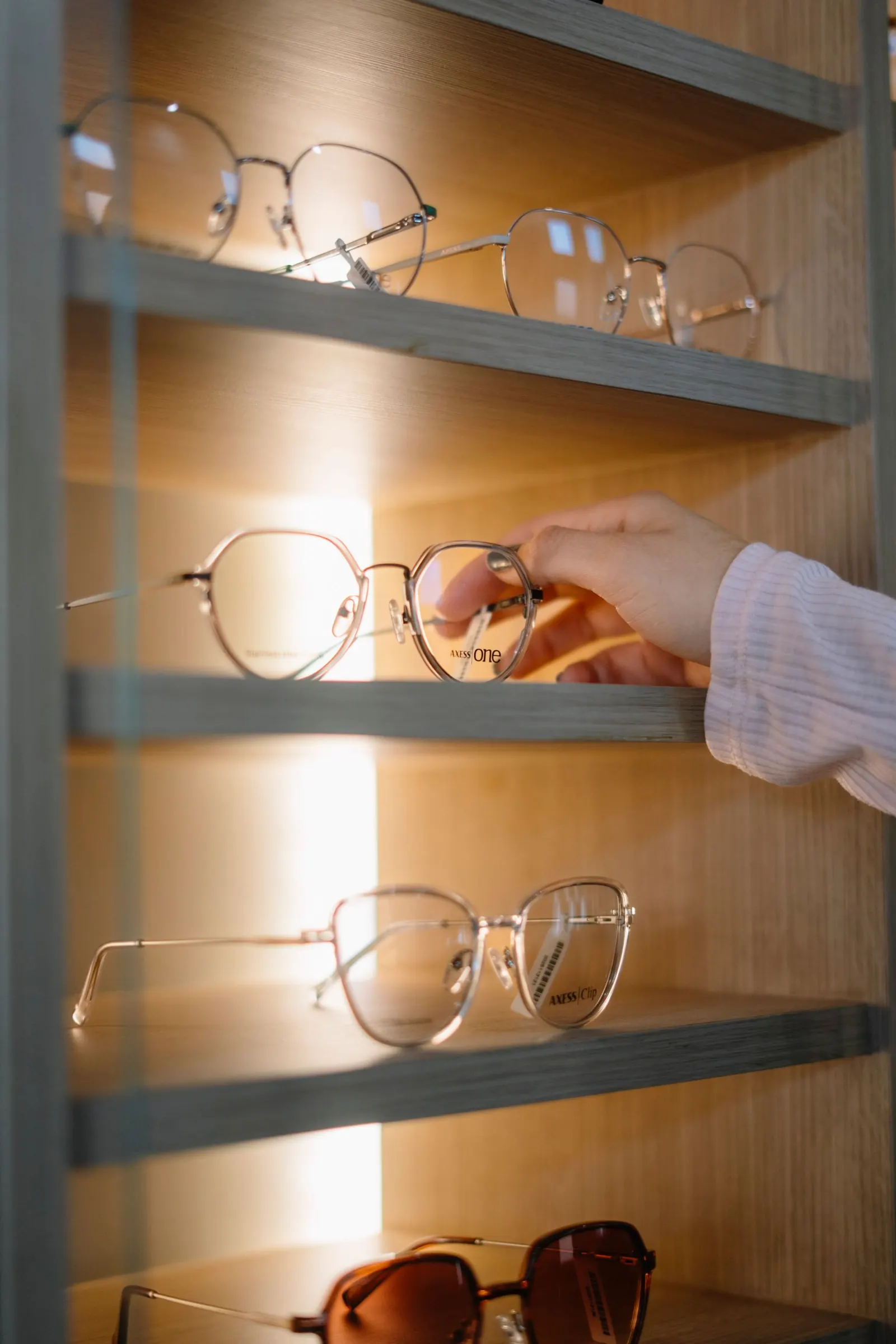
A great frame isn't just a pretty shape. It's a piece that spends 12 hours a day on your face, takes autumn rain, January cold, blind tosses onto the bedside table — and still needs to hold up.
1. Material first
- Acetate: the reference for durability and color depth. Ray-Ban Wayfarer, Persol 649, Tom Ford — all acetate.
- Metal (titanium, monel, stainless steel): lighter, ideal for thin frames.
- Injected plastics: cheaper, but they break faster. Fine for kids, less so for an adult investing.
- Wood or horn: beautiful, but they demand consistent care.
2. The hinge makes all the difference
On a frame built to last, the hinge is riveted (screwed), often with 5 or 7 barrels. On the cheapest models, it's a simple plastic weld — the first point of failure. Premium brands like Persol, Oakley and Tom Ford pay particular attention to this.
3. Shape: match the face, not the trend
- Round face: angular frames (rectangular, geometric) to add structure.
- Square face: rounded or oval frames to soften.
- Oval face: almost anything works — enjoy it.
- Heart-shaped face: frames wider at the bottom (aviators, modern wayfarers).
4. What about the lenses?
A gorgeous frame with low-end lenses is like a Porsche on worn winter tires. For lenses that last: anti-reflective coating, scratch-resistant treatment, and a proper index (1.6 or 1.67 for an average prescription, 1.74 for strong ones). We configure all of this for you in store.
Going further
See our brands in store
30+ premium brands across our optical clinics. Our opticians guide you to the perfect frame.
Going further
Free fitting adjustments, for life
Glasses sliding or off-center? Drop by any clinic — it's free, walk-in, even if you didn't buy them from us.