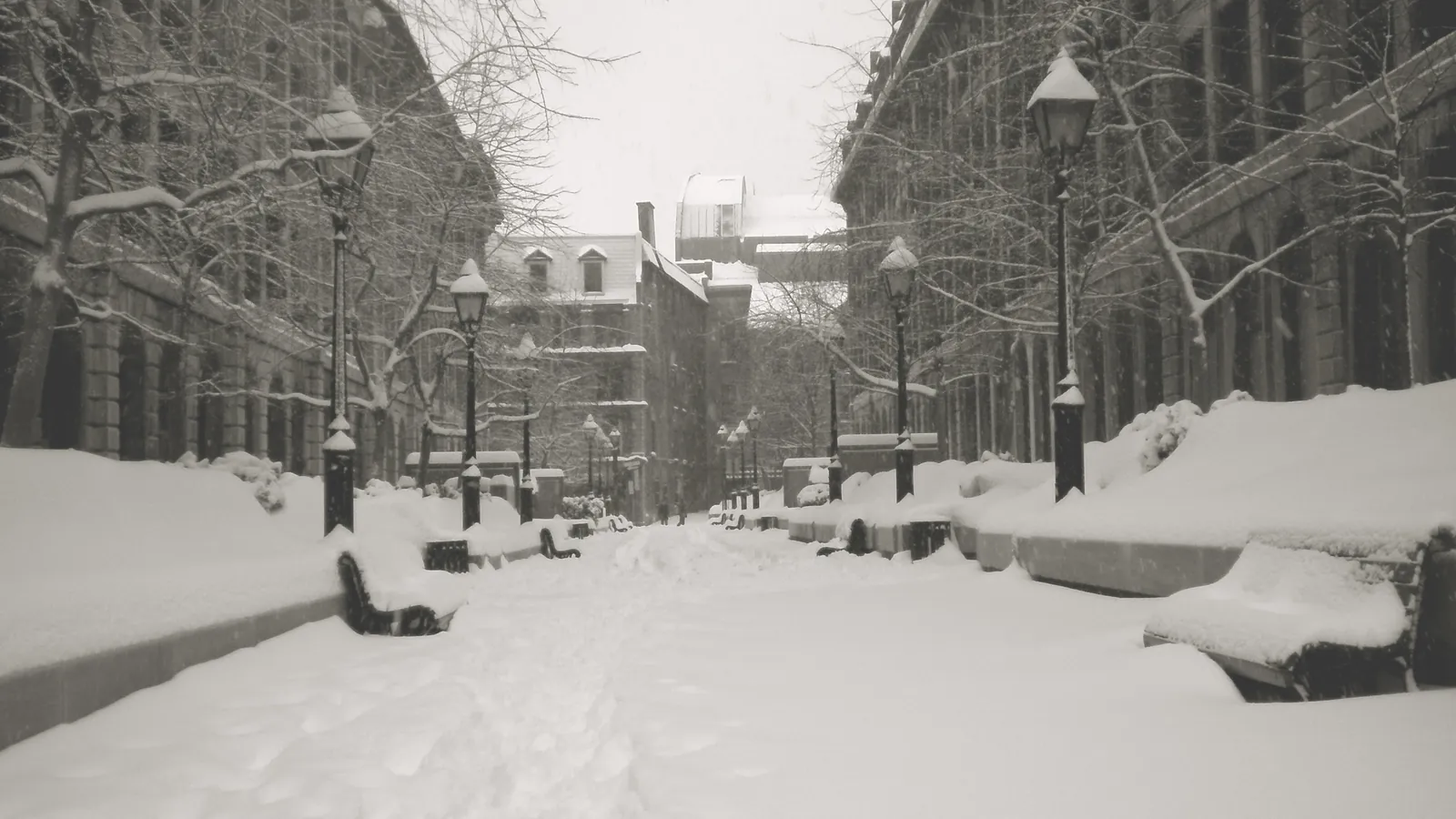
If every January feels like sand in your eyes, you're not alone. Dry eye is one of the most common reasons people walk into our optometry clinics during the cold months. Here's why — and more importantly, what you can do.
The (un)winning combo of a Québec winter
- Outdoor air is extremely dry: at 5 °F, absolute humidity is very low.
- Indoor heating drops humidity even further, sometimes down to 15-20%.
- We blink less in front of screens — about 50% less, on average.
- The river wind, especially downtown and in Old Montréal, speeds up tear evaporation.
5 things that actually move the needle
- 1Add a humidifier to your bedroom or office. Aim for 40-50% relative humidity.
- 2Use preservative-free artificial tears 3 to 4 times a day. (We carry recommended brands in store.)
- 3Take a screen break every 20 minutes: look 20 feet (~6 m) away for 20 seconds. That's the 20-20-20 rule.
- 4Drink water. Mild dehydration directly affects your tear production.
- 5If you wear contacts: switch to daily disposables with added hydration, or ask us about winter-friendly alternatives.
When to see an optometrist
If symptoms last more than two weeks, wake you at night, or cause intermittent double vision, it's no longer "just winter". An assessment determines whether your dry eye comes from reduced tear production (aqueous-deficient) or excessive evaporation (Meibomian gland dysfunction) — the treatments are different.
Going further
Get your dry eyes assessed
Our optometrists in Ahuntsic, Villeray, ParcEx, Glen, HMR and Saint-Rémi are equipped to evaluate your tear film and build a tailored plan.
Going further
Find your nearest clinic
optical clinics across Montréal and the Montérégie, with hours that fit your schedule.